Infrastructure that keeps independent newsrooms independent, and running.
Open Newsrooms is building open-source infrastructure that lets a newsroom keep its publication, archive, audience and identity, and move them between platforms or hosts without starting again.
Each principle below starts in plain language. Open it to see the mechanism underneath. Only the status table at the end says what exists today; everything above it is what we believe a newsroom should be able to do.
Portable identity and pen names already run on OpenFederation’s demo servers. You can try them yourself: an account, a pen name, a proof and a move, wiped every night.
-
Keep what you’ve built
Identity and archive that belong to the newsroom, not the host.
A newsroom should be able to change platform, host or country and take its archive, its audience and its name with it. No single company should own the relationship between a newsroom and the people who read it.
The mechanism
Keys are the identity; servers are replaceable. People and newsrooms get identities they hold themselves: decentralised identifiers (
did:plcanddid:web, in AT Protocol terms). Because the identity does not belong to the server, the stories, archive and followers attached to it can move to another server and keep the same address.A newsroom is an entity, not a personal account. We’re designing organisational identities with staff roles, delegated publishing, “X wrote this while at Y” attestations, and continuity when people leave.
Pseudonymity is a first-class state. Anonymous, pseudonymous or public: the owner decides. The aim is that moving from one to the next is a one-way step only the owner can take, for example a pseudonymous author later proving, once, that they wrote their earlier work.
Portable identity runs today in OpenFederation and has been tested with a closed group. Moving a real newsroom between servers is the next step. See the status table.
-
Keep publishing
No single point of failure.
A failure, block or outage in one place shouldn’t take the whole newsroom down, and a story shouldn’t disappear quietly because one company was asked to remove it.
The mechanism
Replication across independent hosts. We’re designing publishing so stories are copied across independent servers, not held by one company, and any copy can be checked against the original.
Public removal records. If a story does come down, the aim is for the removal to be recorded publicly, as a signed retraction, not to happen quietly.
Offline first, sync on purpose. The aim is that a reporter can write, sign and prepare to publish with no connection, and sync only when they choose. This is possible in principle with a local OpenFederation server, but not yet tested or packaged for ease of use.
Proof of origin. We want every story and its media to carry tamper-evident proof of who made it and how it changed, without exposing the source. OpenFederation has built-in attestations; whether they are good enough for this is still in research.
Keep the editor you know. The plan is to connect to existing publishing tools such as Ghost and WordPress rather than replace them.
-
Don’t depend on one gatekeeper
Run by independent organisations.
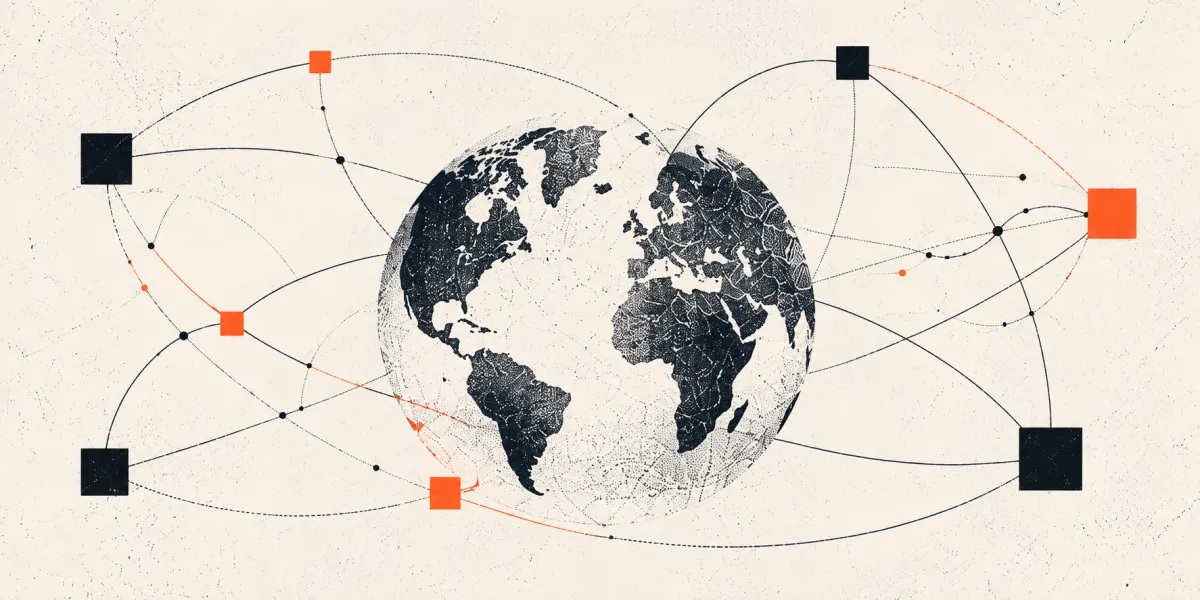
The infrastructure should be run by many independent organisations, not controlled by a single platform, company or state, and not by us either.
The mechanism
Federation between allied servers. Servers run by independent organisations share data with one another, so no single operator decides who is seen or what stays up. This works today between OpenFederation’s own servers; federation with independent organisations’ servers is the next step.
Open governance. Every line of code is public and every dataset exportable in open formats. Governance is being designed so the project outlives its founders and its funders, with commitments such as no-logging written into the rules of the organisation, not left as a setting.
Cryptography, yes. Crypto-economics, never. No tokens, no coins, no wallets, no on-chain governance.
How we work:
- Working groups per building block, each with a public charter and a maintainer.
- Prototypes over meetings. Contested questions get two thin implementations and a comparison.
- Every change is checked against the threat model before it merges.
- Upstream first. A fix that belongs in an existing tool or open standard goes there, not into a fork.
- Documentation and training are product, not an afterthought.
-
Safe by default
Security that doesn’t need a specialist.
Staying safe shouldn’t depend on being a security expert. The secure path should be the easy one.
The mechanism
Why it matters. In 2025 two journalists at the Balkan Investigative Reporting Network (BIRN) in Serbia were targeted with Pegasus spyware (BIRN, 28 March 2025). Most reporters still work from personal phones and are expected to protect their sources without expert help.
Safe defaults. We want messaging and publishing tools to come configured safely, so a reporter doesn’t need security training to use them. The defaults we’re designing for are no logging, no telemetry and encryption at rest. Metadata (who talked to whom, when, from where) is treated as being as dangerous as content.
No single arrest locks a newsroom out. The aim is for institutional keys to be split between several trusted people (Shamir secret sharing), with a tested way to make keys unrecoverable fast.
What we point to, not build. Secure communication, hardware security keys and secure workstations already exist in good open tools such as Signal, Nitrokey and Tails. We don’t build these; Building Blocks lists them, with a starter kit for safe work.
-
What it’s built on
OpenFederation and the AT Protocol.
Open Newsrooms is built on OpenFederation, an open platform for community-owned identity and data. We adopt before we build: where a good open tool or standard exists, we integrate it and contribute upstream.
The mechanism
Why the AT Protocol. OpenFederation is based on, and extends, the AT Protocol, the open standard behind Bluesky. In the AT Protocol, identity and data are separate from the server by design, so an account can move to a new host and keep its identity and its followers. That is the property a newsroom needs most.
What OpenFederation adds. Identity for communities and organisations, not only individuals, and servers that share data with one another. Its identity server runs; data sharing works between its own servers; work has started on connectors to other federated networks.
→ Full technical status at openfederation.net
- Not a CMS.
- Not a social network.
- Not a messenger.
- Not a blockchain.
- Not a competitor to Signal, Tails, Ghost or SecureDrop.
- Not a place that ever holds money.
What exists, what’s being tested, what’s planned
| Component | Status |
|---|---|
| Portable identity (OpenFederation) | Running; tested with a closed group |
| Data sharing between servers | Working between OpenFederation’s own servers |
| Federation with independent organisations’ servers | Next step |
| Moving a real newsroom between servers | Next step |
| Publishing with replication and removal records | In research |
| Offline-first writing | Possible in principle with a local OpenFederation server; not yet tested or packaged for ease of use |
| Proof of origin / provenance | In research. OpenFederation has built-in attestations; not yet confirmed they’re good enough for this use case |
| Secure communication | Not built by us. We point to existing tools. A suite may come later; not planned |
| Hardware keys and secure workstation | Not built by us. We point to existing tools. A suite may come later; not planned |
Status confirmed 30 September 2026 · Full technical status at openfederation.net · The long argument: Manifesto
Help decide what gets built
The main decisions are still open. The founding working group meets this autumn, and it is free to join.